


“My cousin Vinnie makes websites. It’s not that big a deal. He’ll do it this weekend.”
I heard some version of that in almost every business conversation in 1997. Plenty of companies took the deal. Looking back, the real mistake is clear: it was never a technical problem. It was an opportunity cost problem disguised as one, and the organizations that missed that distinction paid for it in time they never got back. I’m hearing the same conversation again now - it just involves bad vibe coding.
What brought it back was Mozilla’s new State of Open Source AI report, a substantial piece of work and worth the read.
Two quick slide pulls:
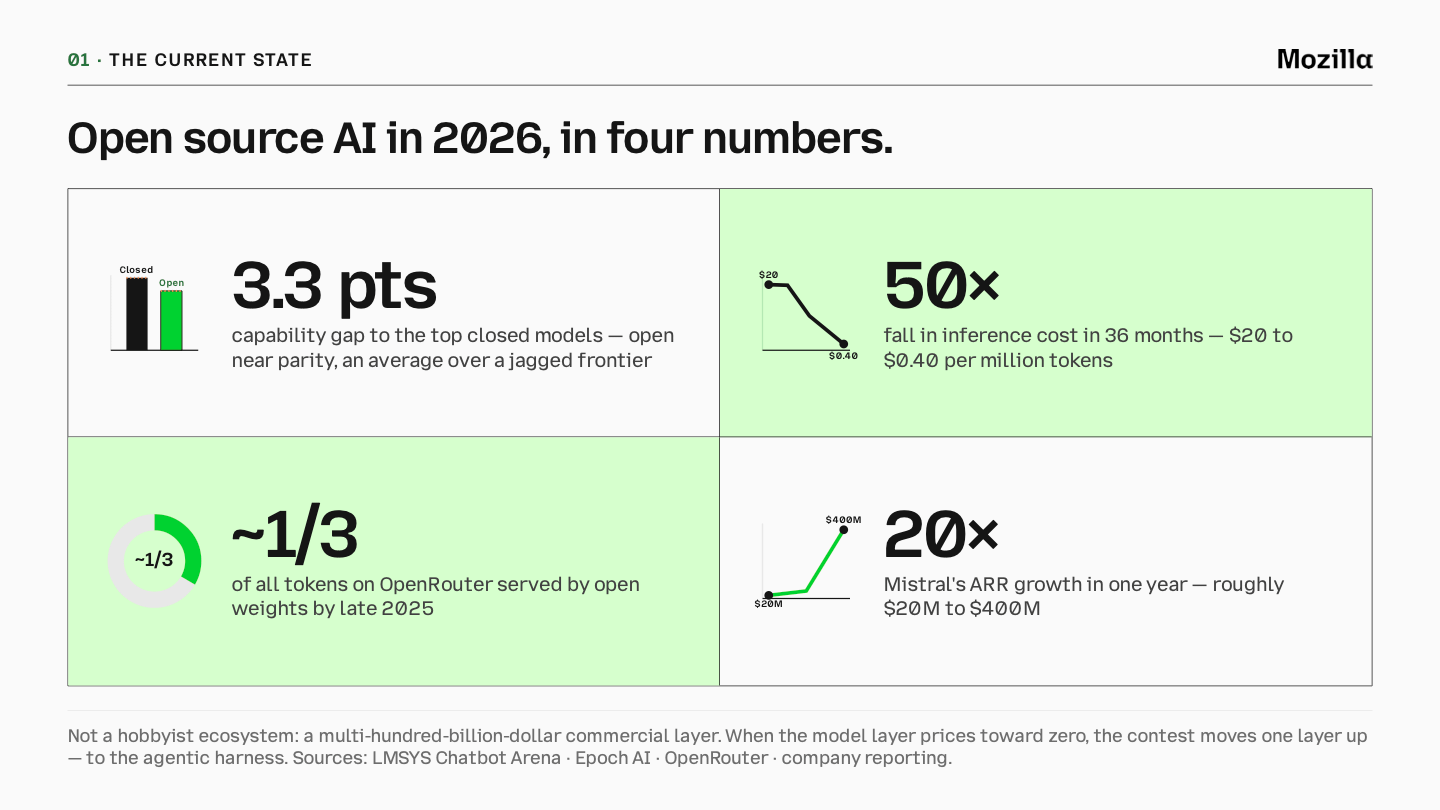
The bills have started to come due.
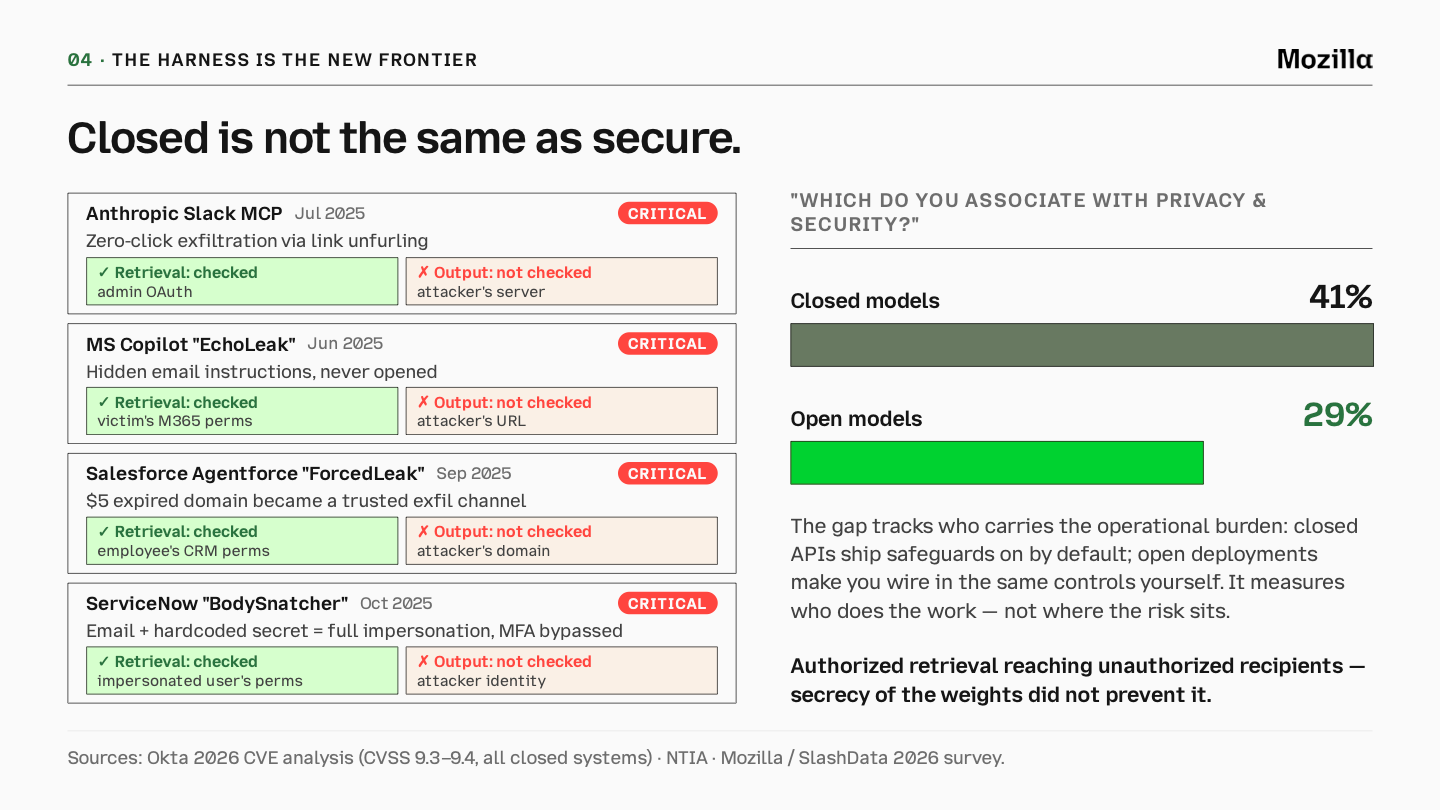
But the alternative isn’t quite so simple. See the full deck here.
What I kept coming back to wasn’t what AI can or can’t do. It was an older question: what does your organization need to own, and what can you genuinely rent? By rent, I mean you could actually leave. If leaving is expensive - assuming it is even technically practical - then you’re not renting.
To its credit, the report is honest about both failure modes: rent everything and the per-token meter eventually owns your budget; own everything and you inherit maintenance work most teams aren’t staffed for.
The open source Linux kernel was released in 1991 and licensed under the GPL the following year. It ran the dot-com boom of the late 1990s, but it didn’t enter regulated, mission-critical enterprise environments until Red Hat Enterprise Linux gave large organizations something they could certify, support, and hold a vendor accountable for - more than a decade after the code first shipped. Today, Linux runs on the majority of the identifiable web, and every one of the world’s 500 fastest supercomputers. (For stock investors to note, the value, ultimately, accrued to the services layer wrapped around the transformational technology, not to the technology itself.)
By that clock, AI is at about 1998. But each of these clocks runs faster than the last: mobile moved faster than the internet did, and AI is moving faster than mobile. The foundation is still being poured, and plenty of organizations are framing the house on top of it anyway. Leaders who know they’re building on ground that hasn’t settled can manage that risk. Leaders who don’t - who are optimizing today’s decisions around supposed efficiencies - won’t just miss the efficiencies. They’ll put the organization itself at risk.
Which is the real cousin Vinnie lesson. The failure in 1997 wasn’t bad websites. It was leaders who couldn’t tell a weekend project from a foundational decision - and some of the businesses that got it wrong never caught back up. And that was on a clock that gave them years to correct course. This one won’t.
So some questions worth thinking about - if you had to move a whole business to a new foundation in three years, how much of today’s investment would move with you? And does the person in your organization making that call today really get it? And the question that matters most if that person is you: if you get that call wrong, will you be the one making the next decision - or will someone else?
Curious what others think.